

How to Keep Indoor Cats Entertained: 7 Ways to Prevent Boredom
To keep an indoor cat entertained, provide vertical climbing space, rotate interactive toys regularly, use puzzle feeders for meals, give window access, and schedule daily active play sessions — because boredom in cats often shows up as destructive behaviour, overeating, or lethargy. Indoor cats live longer than outdoor cats, but without enough stimulation they become understimulated and stressed.
1. Give them height with a cat tree
Cats instinctively want elevation — high spots feel safe, and climbing is exercise. A 44-inch cat tree with sisal posts and hammock gives cats a place to climb, scratch, and survey the room. Position it near a window for maximum interest.
2. Use self-moving toys for solo play
A self-moving rolling ball activates a cat's full hunting sequence without needing you to hold a wand. The random direction changes mimic prey and keep cats interested far longer than predictable patterns.
3. Turn mealtime into enrichment
Scatter kibble in a lick mat or puzzle feeder instead of a plain bowl. A suction-cup lick mat spreads wet food thin for a multi-minute licking session. This slows eating and provides genuine mental engagement at every meal.
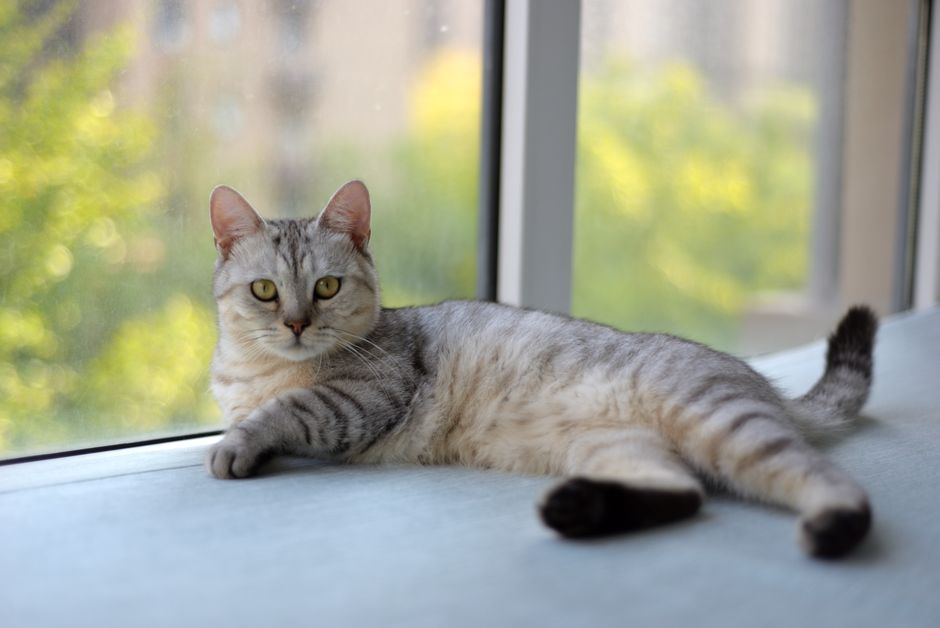
4. Create a window watching spot
Bird feeders outside the window are the original cat TV. A perch or cat tree positioned at a window with a view of birds, squirrels, or foot traffic gives passive entertainment for hours.
5. Schedule 10–15 minutes of active play daily
Wand toys, laser pointers (always end on a physical toy they can catch), and crinkle balls all work. The key is daily consistency — one good session is better than three rushed ones. An interactive sound ball responds to every touch, letting cats play independently between sessions.
6. Rotate toys every few days
A toy that's always available becomes invisible. Put toys away after sessions and rotate them — when a "new" toy reappears after a week, your cat will approach it with fresh curiosity.
7. Provide scratching surfaces
Scratching is not destructive — it's essential for claw maintenance, stretching, and marking territory. Sisal-covered cat trees and horizontal scratching pads protect your furniture while giving cats what they need.
Frequently asked questions
How many toys does an indoor cat need?
Quality over quantity — 4–6 toys in rotation is more stimulating than 20 always available. Vary the type: wand, ball, puzzle, and crinkle.
How do I know if my cat is bored?
Signs include excessive grooming, over-eating, aggression toward other pets, destructive scratching, or sleeping more than usual (18+ hours a day).
Should I get a second cat to keep the first entertained?
Sometimes — but introduce cats slowly. Some cats prefer to be the only pet. Enrich the environment first and see if that resolves the boredom.
Shop all cat enrichment toys and accessories.
Read next: Part of our complete Cat Enrichment & Play Guide. See also Slow Feeder Dog Bowls: Benefits, How They Work, and Who Needs One and Dog Puzzle Toys and Mental Enrichment: Why It Matters and What to Buy.
Want more must-haves your dog & cat will love? Discover them all at Petopia Dreams (petopiadreams.com).
🛍 Shop the gear: Browse our Travel & Car collection →
📖 Go deeper: Read our complete guide →