

Dog Harness Fit Guide: Prevent Escape & Pulling by Size
To fit a dog harness properly, measure your dog's girth and neck, choose a size where you can slide two fingers flat under every strap, and adjust the chest and belly straps so the harness cannot slip over the shoulders or head when your dog backs up. A correct fit distributes pressure across the chest instead of the throat, which is the main reason a well-fitted harness prevents escape and reduces pulling on walks. Getting this right takes about five minutes but affects every walk your dog will ever take.
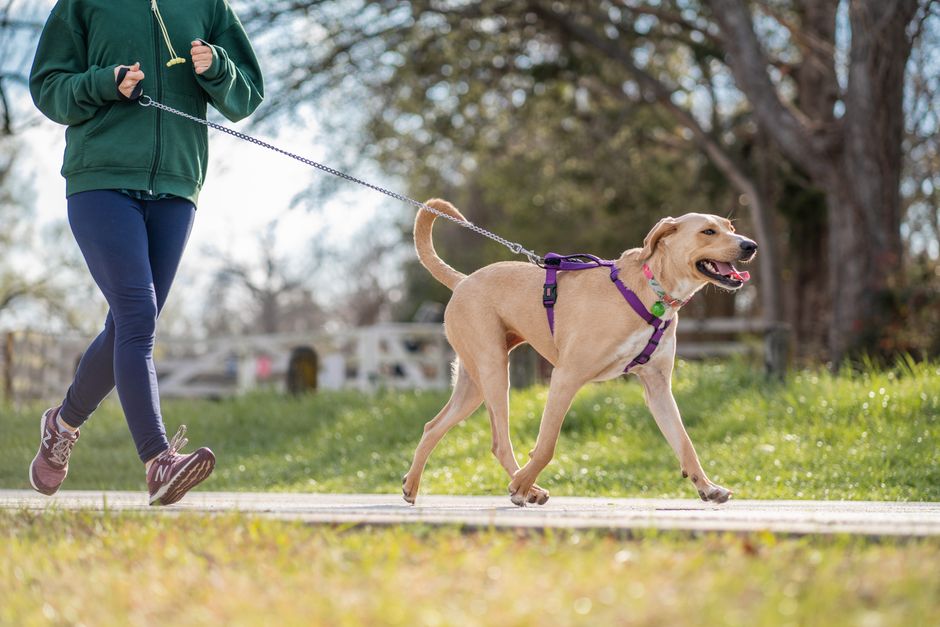
How a Properly Fitted Harness Prevents Escape
Dogs escape harnesses in two ways: backing out of a loose neck opening, or wriggling free when the belly strap sits too far forward. A snug, correctly positioned harness closes both gaps. The neck loop should sit high on the chest, not down near the shoulder joints, and the belly strap should rest just behind the front legs, not against the ribcage. This is the core principle behind how to fit a dog harness prevent escape attempts during startle events like fireworks or sudden traffic noise. The Rainbow Colorblock Dog Harness Leash Set No Escape Vest uses a four-point adjustment system specifically to close the shoulder-slip gap that causes most reported escapes. Test the fit by lifting the leash straight up; if the harness rotates or slides forward past the shoulders, it's too loose, regardless of what size label it carries.
Dog Harness Fit by Size and Breed: Why One Chart Isn't Enough
Breed shape matters as much as weight. A 20-lb Dachshund and a 20-lb French Bulldog need different strap geometry because chest depth, neck length, and shoulder width vary drastically between builds. This is why dog harness fit by size and breed guidance should always reference girth (the widest part of the ribcage, just behind the front legs) rather than weight alone. Deep-chested breeds like Greyhounds need a harness with a longer chest panel, while barrel-chested breeds like Pugs need wider belly straps to avoid rubbing. Weight charts are a starting point, not a final answer — always measure with a soft tape measure and cross-check against the brand's actual girth range before ordering.
By the numbers:
• A harness with even 1 inch of extra slack at the neck loop increases backing-out escape risk significantly during leash-pressure events.
• Two-finger clearance under every strap is the industry-standard fit check used by trainers and shelters alike.
• Most reported harness slips happen within the first 3 minutes of a walk, before the dog "settles" and the straps naturally shift.
Sizing Steps: Measuring Girth, Neck, and Weight Correctly
Wrap a soft tape measure around the widest point of your dog's ribcage, directly behind the front legs, and record the girth in inches. Measure the neck base separately, since a harness sized only by girth can still be too loose around the shoulders. Weigh your dog last, as weight is the least reliable variable — a muscular 30-lb dog and a lean 30-lb dog can need different harness sizes entirely. Products built for a specific range, such as those fitting dogs 8-25 lbs with a small-to-medium chest girth of roughly 16-22 inches, will list both girth and weight; always size to girth first when the two disagree. If your dog is between two sizes, size up and tighten the straps rather than sizing down and risking chest compression.
No-Pull Harness Sizing Guide for Dogs: Front-Clip vs. Back-Clip Fit
A no-pull harness sizing guide for dogs has to account for clip position, because front-clip and back-clip harnesses fit differently even at the same size number. Front-clip designs need a slightly tighter chest strap so the leash attachment doesn't drift sideways when your dog pulls, redirecting them back toward you instead of letting momentum continue forward. Back-clip harnesses are more forgiving on fit but do less to reduce pulling force on strong dogs. The Tactical Dog Harness Adjustable No Pull Vest For Working Dogs offers a dual front-and-back clip setup, letting you switch attachment points as training progresses without buying a second harness. Always re-check the two-finger rule after switching clip points, since tension distribution changes across the straps.
Materials That Affect Fit, Durability, and Comfort
Material choice changes how a harness fits over time, not just how it looks. Tear-resistant nylon holds its shape wash after wash, which matters because stretched-out webbing is a leading cause of gradual fit loosening. A waterproof TPU coating on the underside prevents the harness from absorbing water and mud, keeping weight consistent and preventing chafing on wet coats. Breathable evaporative mesh lining, used in the Reflective No Pull Dog Harness Vest Soft Padded Comfort, keeps the fit comfortable during long or warm-weather walks by reducing heat buildup under the straps, which otherwise causes dogs to shift and loosen the harness themselves through repeated scratching or rolling.
Comparing Harness Styles Side by Side
| Harness Type | Best For | Escape Resistance | Pull Control |
|---|---|---|---|
| Step-in Harness | Calm small dogs | Low-Moderate | Low |
| Four-Point Adjustable Vest | Nervous or wriggly dogs | High | Moderate |
| Front-Clip No-Pull | Strong pullers | Moderate-High | High |
| Tactical/Working Harness | Active, muscular breeds | High | High |
Safety Features That Reinforce a Good Fit
Fit and safety features work together, not separately. A reflective strip stitched along the side panels keeps a correctly fitted harness visible during dawn or evening walks, which matters because most fit-related incidents (a dog slipping free) happen in low-visibility conditions where owners react slower. A dedicated harness access port lets you attach ID tags or a small light without loosening the main straps to thread them through, preserving the fit you already dialed in. Look for BPA-free hardware on every buckle and D-ring, since cheap plastic clips can crack under sudden pulling force, and a cracked buckle turns a well-fitted harness into an escape risk in seconds.
Escape Risk by Fit Quality (relative frequency)
Too Loose (visible gap)
Slightly Loose (1-2 finger gap)

Correct Fit (two-finger rule)
Too Tight (chafing risk)
Correctly fitted harnesses show the lowest escape risk, while both too-loose and too-tight fits introduce new problems.
Common Fitting Mistakes That Undo a Good Harness
The most common mistake is buying by weight alone and skipping the girth measurement, which leads to a harness that's technically "in range" but still loose on a narrow-chested dog. The second mistake is under-tightening the belly strap out of concern for comfort, when a slightly firm (not restrictive) belly strap is what actually keeps the harness anchored during a sudden lunge. Third, owners often forget to re-check fit after grooming or seasonal coat changes, since a thick winter coat can make a harness feel snug that becomes dangerously loose once the coat sheds. Finally, skipping the "lift test" — pulling the leash straight up to see if the harness slides forward — means fit problems go unnoticed until an actual escape attempt happens on a walk.
Caring for Your Harness to Maintain Fit Over Time
Webbing stretches gradually with repeated wear, so re-measure and re-adjust every few months, especially for growing puppies or dogs with fluctuating weight. Hand wash nylon components in cool water and air dry away from direct heat, since high heat weakens stitching and can warp plastic buckles, undermining the exact hardware that keeps a harness secure. Inspect D-rings, stitching, and the harness access port monthly for fraying or hairline cracks, and replace the harness immediately if any load-bearing seam shows wear, since a fit that was perfect on day one can fail silently after months of use.
Frequently asked questions
How do I know if my dog's harness is too loose?
If you can fit more than two fingers under any strap, or the harness rotates or slides forward when you lift the leash, it's too loose.
What's the two-finger rule for harness fitting?
You should be able to slide exactly two fingers flat between the strap and your dog's body at the neck, chest, and belly points; tighter risks chafing, looser risks escape.
Do front-clip harnesses need a different size than back-clip harnesses?
Not always a different size number, but front-clip harnesses typically need a slightly tighter chest strap to keep the leash attachment stable during pulling.
How often should I re-measure my dog for harness fit?
Re-measure every few months for adult dogs and monthly for growing puppies or dogs with recent weight or coat changes.
Can a well-fitted harness stop a determined dog from escaping?
A properly fitted, four-point adjustable harness significantly reduces escape risk by closing shoulder-slip gaps, though no harness is 100% escape-proof for every dog and situation.
Browse Petopia Dreams' full safety-walking collection to find a properly sized, escape-resistant harness for your dog's exact build.
Related reading: For breed-specific sizing charts, see our No-Pull Dog Harness Sizing by Breed guide, and for daily walking safety habits, check out Dog Harness Fit by Size & Breed: Daily Walking Safety.
Want more must-haves your dog & cat will love? Discover them all at Petopia Dreams (petopiadreams.com).