

Best Dog Stairs & Ramps for Puppies & Senior Dogs: Joint Support Guide
The best dog stairs and ramps for puppies and senior dogs are orthopedic, non-slip models with wide steps or gentle inclines under 25 degrees, high-traction surfaces, and weight capacities matched to your dog's size. These tools reduce strain on hips, knees, and spines during everyday jumps onto beds, sofas, and cars, which is especially critical for growing puppies with soft joints and senior dogs managing arthritis. Choosing the right option means balancing incline angle, material durability, and stability so your dog actually wants to use it.
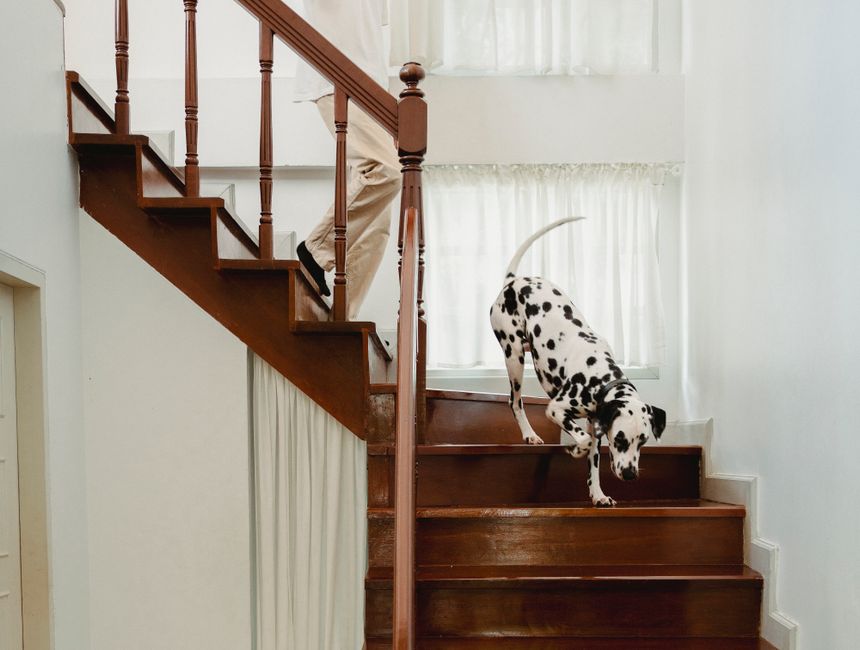
How Dog Stairs and Ramps Support Joint Health
Repeated jumping compresses the front legs and spine on landing, and over years this contributes to disc disease, patella issues, and early arthritis, particularly in small and toy breeds prone to luxating patellas. Stairs break a jump into smaller, controlled steps, while ramps eliminate the jump motion entirely by letting a dog walk a gradual slope. Veterinary rehabilitation specialists commonly recommend both tools for dogs recovering from surgery, managing hip dysplasia, or simply aging past the point where a 24-inch leap onto a bed is safe. Well-designed dog stairs for puppies and senior dogs distribute body weight across multiple shallow steps rather than one hard landing, which meaningfully lowers peak joint load. This matters most for dogs under 25 lbs with delicate limbs and for large breeds carrying more weight through already-stressed hips. The right equipment isn't a luxury item; it's a preventive health investment that pays off in fewer vet visits down the road.
Choosing Between Stairs and Ramps
Stairs generally suit dogs that are still confident walkers but need help with height, while ramps work better for dogs with limited mobility, tremors, or post-surgical restrictions where any stepping motion is discouraged. Small apartments favor compact folding stairs, while multi-level households or car access often call for longer telescoping ramps. When shopping for orthopedic dog stairs for mobility, look at step depth (at least 10 inches lets a paw sit flat) and check whether the incline stays under 25 degrees, the threshold most rehab vets cite as safe for arthritic joints.
| Option | Best For | Typical Incline | Space Needed |
|---|---|---|---|
| 3-Step Stairs | Puppies, small breeds | Moderate | Low |
| Foldable Ramp | Senior dogs, post-surgery | Low (under 20°) | Medium |
| Telescoping Car Ramp | SUVs, trucks | Adjustable | Large when extended |
Sizing and Fit for Every Dog
An undersized stair set forces a dog to stretch between steps, defeating the purpose entirely, while an oversized ramp can wobble under a lightweight puppy. Most orthopedic stair models fit dogs 8-25 lbs comfortably, while reinforced ramps rated for 100+ lbs suit larger breeds climbing into trucks or high beds. Measure the height from floor to your sofa or bed and match it against the product's total rise, then confirm the platform width is at least as wide as your dog's shoulders plus two inches for comfortable turning.
Weight capacity by product type
Bar widths represent relative maximum weight capacity across common product tiers, from lightweight puppy stairs to heavy-duty ramps.
Materials That Matter
Surface material determines both traction and lifespan. Look for tear-resistant nylon covers over foam steps, which resist claws far better than thin fabric, and waterproof TPU coating on outdoor or car ramps so rain and mud wipe off instead of soaking in. Interior foam should be firm enough to hold shape under repeated pressure yet soft enough to cushion paw pads; low-density foam compresses within months and becomes a hazard. Frames matter too—engineered wood or reinforced plastic resists warping better than particleboard, especially in humid climates. A well-built set should hold its shape after thousands of steps, not just the first few weeks. Pairing sturdy stairs with soft landing spots elsewhere in the home, like a Reversible Cooling Dog Bed Mat Cool Summers Cozy Winters, gives joints a break both during the climb and after it, since the resting surface itself absorbs pressure rather than the dog's hips doing all the work.
Safety Features That Actually Protect Joints
Beyond incline and material, specific safety features separate genuinely protective products from decorative ones. Non-slip rubber grips on the base prevent the entire unit from sliding when a dog puts weight on the top step, and a raised side lip on ramps stops paws from sliding off the edge mid-climb. Reflective strip trim helps at night for dogs using ramps to reach outdoor potty spots, and BPA-free foam and coatings matter for puppies still prone to chewing edges. Weight-rated construction should be clearly listed, not estimated, so owners aren't guessing whether a 60 lb senior Labrador exceeds a stair's limit.
By the numbers:
- Inclines above 25° increase joint stress significantly compared to gentler slopes.
- Step depths under 8 inches force unnatural paw placement in most medium breeds.
- Roughly 1 in 5 senior dogs shows signs of joint discomfort that mobility aids can help manage.

Care and Maintenance for Long-Term Use
Wipe stairs and ramps weekly with a damp cloth and mild pet-safe soap, focusing on grooves where dirt and fur collect and can eventually reduce traction. Check screws and folding hinges monthly, since loosened joints are a common cause of wobble that makes dogs hesitant to climb. Covers with removable, machine-washable fabric extend usable life considerably compared to fixed foam, and drying them fully before reattaching prevents mildew buildup inside foam cores. Rotate placement occasionally if the surface sits near direct sunlight, since UV exposure can dry out and crack certain coatings, particularly waterproof TPU coating on outdoor ramps left outside year-round. A well-maintained ramp should show no visible sagging after a year of daily use; if it does, replace it rather than risk a joint injury from a collapsing step.
Common Mistakes Pet Owners Make
The most frequent error is buying based on price alone and ending up with an incline too steep for the dog's actual condition, which discourages use entirely. Another is skipping the introduction period; dogs need several short, treat-reinforced sessions to trust a new stair set rather than being placed on top and expected to descend immediately. Owners also underestimate step count for taller furniture, choosing 2-step models for beds that really need 3 or 4 steps to keep incline gentle. Finally, many forget that mental engagement matters during recovery periods too, so pairing mobility support with enrichment like a Snuffle Mat For Dogs Slow Feeder Sniffing Puzzle Toy keeps a less mobile dog stimulated without demanding physical exertion, which is especially useful during post-surgical rest periods when the dog's world temporarily shrinks to one room.
Comparing Real-World Value
When evaluating the best ramps for joint support against traditional stairs, consider total cost of ownership rather than sticker price. A durable ramp with reinforced frame construction and a five-year usable lifespan often costs less per year than a flimsy stair set replaced every six months. Also weigh portability: folding ramps that collapse flat for car trunks offer more everyday flexibility than fixed stair units, though stairs typically win on stability for dogs unsteady on inclines. Neither option is universally superior; the right choice depends on your specific dog's mobility level, home layout, and the surfaces they need to reach most often.
Frequently asked questions
Are dog stairs better than ramps for arthritic dogs?
Ramps are usually gentler since they avoid the repeated stepping motion that can aggravate arthritic joints, though very unsteady dogs sometimes do better with wide, low stairs offering more stable footing.
What weight can most orthopedic dog stairs hold?
Most compact models are rated for dogs 8-25 lbs, while reinforced heavy-duty stairs and ramps can support 100 lbs or more; always check the listed capacity before purchase.
How do I train my dog to use stairs or a ramp?
Start with the unit flat on the ground, lure with treats for a few days, then gradually introduce it at full height once your dog steps on confidently.
Can puppies use the same stairs as senior dogs?
Yes, as long as the step height and incline suit the puppy's smaller size; many orthopedic stairs are designed to support both growing joints and aging ones.
What material lasts longest for outdoor ramps?
Waterproof TPU coating over a reinforced frame resists weather damage far better than untreated fabric or bare wood, making it the top choice for outdoor or car use.
Explore Petopia Dreams' full beds & furniture collection to find joint-supportive stairs, ramps, and resting solutions built for every life stage.
Related reading: Best Orthopedic Dog Bed for Puppies & Senior Dogs and Puppy & Senior Dog Stairs: Joint Support Ramps.
Want more must-haves your dog & cat will love? Discover them all at Petopia Dreams (petopiadreams.com).